Closing a pool for winter comes down to four steps done in order: balance the water, add a winterising treatment, lower the water level and clean the pool, then fit a winter debris cover. Most UK pool owners do this in mid-to-late October, once water temperature consistently drops below 12°C. Skipping the winterising chemical step is the most common reason people find algae or staining when they reopen in spring.
Closing a pool down properly takes an afternoon, but doing it in the right order matters more than most people expect. Rush the chemical step or skip it entirely, and you’ll likely spend spring fighting algae instead of just testing the water and diving in. This guide walks through the full process in order, with a link to everything you need at each step.
Step 1: Test and Balance the Water
Before anything else goes into the pool, test and correct the pH and chlorine levels. Aim for pH 7.2-7.6, closing a pool with water that’s already out of balance just locks the problem in for the whole winter, and you’ll be fixing it under a cover in spring instead of fixing it now.
Browse Pool Chemicals →
Step 2: Add a Winterising Treatment
Once the water’s balanced, add a winterising treatment. This protects against algae and staining while the pool sits covered and unused for months, skipping this step is the single most common reason people open their pool in spring to green or cloudy water.
Browse Winterising Chemicals →
Step 3: Clean and Lower the Water Level
Give the pool a final clean, brush the walls and floor, empty skimmer baskets, and clear any debris, then lower the water level to just below the skimmers. This stops water freezing and damaging the skimmer or pipework over winter.
Browse Pool Cleaning →
Step 4: Fit the Winter Cover
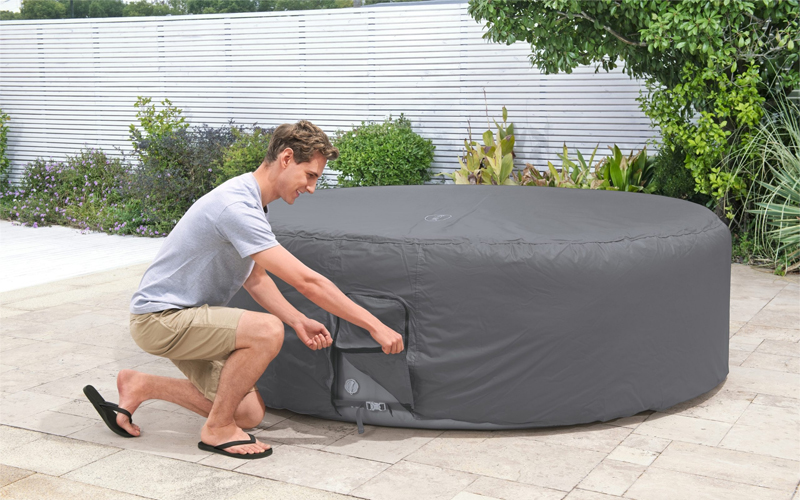
Once water temperature consistently drops below 12°C, usually mid-to-late October in the UK, fit your winter debris cover before the first heavy leaf-fall. If you’re using a reel system, this is also the point to switch from your solar cover to a winter cover, most pool owners use both across the year, solar in season, debris cover over winter.
Browse Covers & Reels →
A Note On Heating
If you’re not extending your season with a heat pump, this is also the point to shut down and drain your heating system to protect it from frost damage. If you are running a heat pump later into the year, a winter debris cover still helps once you’ve stopped swimming for the season, it protects the pool structure even if you’re not actively heating anymore. See our full guide on running costs and heat pump sizing for more on getting the most from a heating system across the season.
Read: How Much Does It Cost to Heat a Pool? →
Getting Ready For Spring
You don’t need to do anything further until spring. When you do reopen, always retest pH and chlorine before swimming, even if the water looked clear all winter, and expect to run a shock treatment to bring it back up to standard after months under cover.
Explore Further
Related Articles
From above ground to bespoke concrete, planning permission to running costs, our complete guide covers everything you need to know …
Reopening your pool properly after winter takes more than pulling the cover off. Our step-by-step checklist covers cleaning, water testing, …
Heat pump or electric heater? We break down real UK running costs for both, plus how much a solar cover …